A Lot Can Change in Three Years
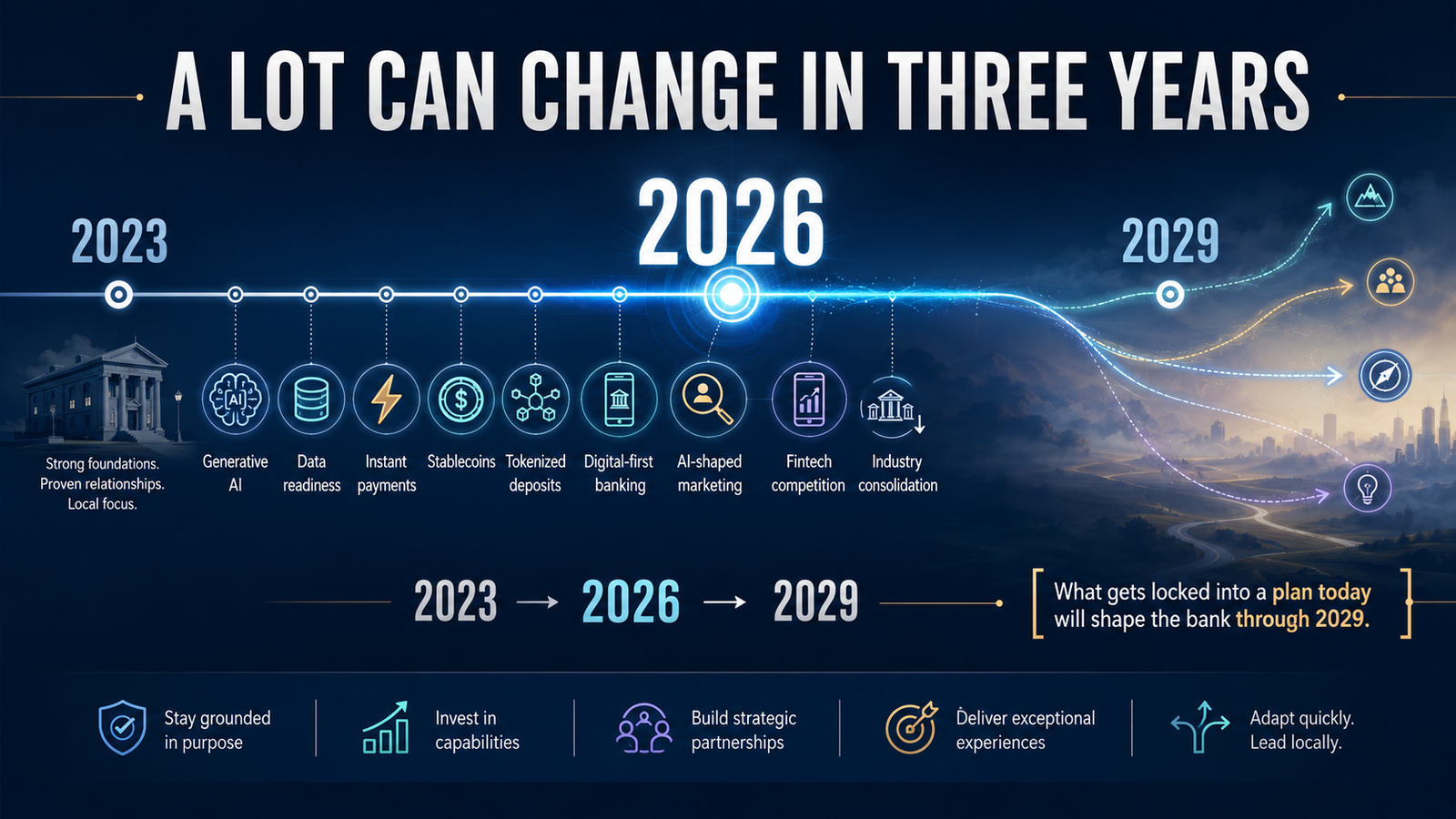
In 2023, ChatGPT had just arrived on the scene, and most banks were debating whether employees should even be allowed to use generative AI. FedNow hadn’t launched. Stablecoins lived firmly in the crypto world, not the regulatory one.
Three years later, much has changed — and three years happens to be the planning horizon most community banks are using right now. Whatever gets locked into a strategic plan today will shape priorities, investment decisions, and technology choices for the next few years.
Before trying to predict the trajectory of banking between now and 2029, it’s worth looking backward first, as a reminder of just how much can shift in three years.
2023 vs 2026:
2023: Banks were debating whether employees should even use generative AI.
2026: AI increasingly runs customer service, fraud detection, lending, development and daily workflows.
2023: Banks struggled to capture and make good use of their data.
2026: That struggle hasn’t gone away — but the stakes are higher, since effective Gen AI adoption depends on data being clean and readily accessible.
2023: FedNow hadn’t launched.
2026: Instant payments run 24/7/365 and are now common.
2023: Stablecoins belonged to the crypto world.
2026: Stablecoins operate under a federal regulatory framework.
2023: Tokenized deposits sounded experimental, if not futuristic.
2026: Banks and central banks are seriously exploring tokenized deposits and programmable money.
2023: Digital banking was a channel — check a balance, move money, deposit a check.
2026: New services are increasingly digital-first or digital-only, which makes the digital banking platform a strategic decision, not just a technology one.
2023: Marketing was about getting found in search results and funneling campaigns to a website.
2026: Marketing has to be credible enough to be surfaced in AI summaries, visible across fragmented channels, and relevant enough to earn attention.
2023: Fintechs were real competitors, but many were still chasing funding and scale.
2026: Stronger fintechs compete directly for deposits, payments, lending, wealth management and small-business relationships — and customers often don’t care if they are “banks” or not.
And in between, the map itself got redrawn: the number of commercial banks fell by 401 (8.5%) and credit unions by 477 (9.9%), as the economics of banking drove consolidation.
That raises an uncomfortable question for banks beginning their next strategic planning cycle: if this much changed between 2023 and 2026, how much should we assume will change between now and 2029?
The challenge isn’t predicting 2029 perfectly. It’s building a bank capable of adapting when our predictions are wrong.
What assumptions in your plan are you least confident about? In a follow-up post, I’ll explore ways to develop a meaningful strategic plan in this unsettled environment.